
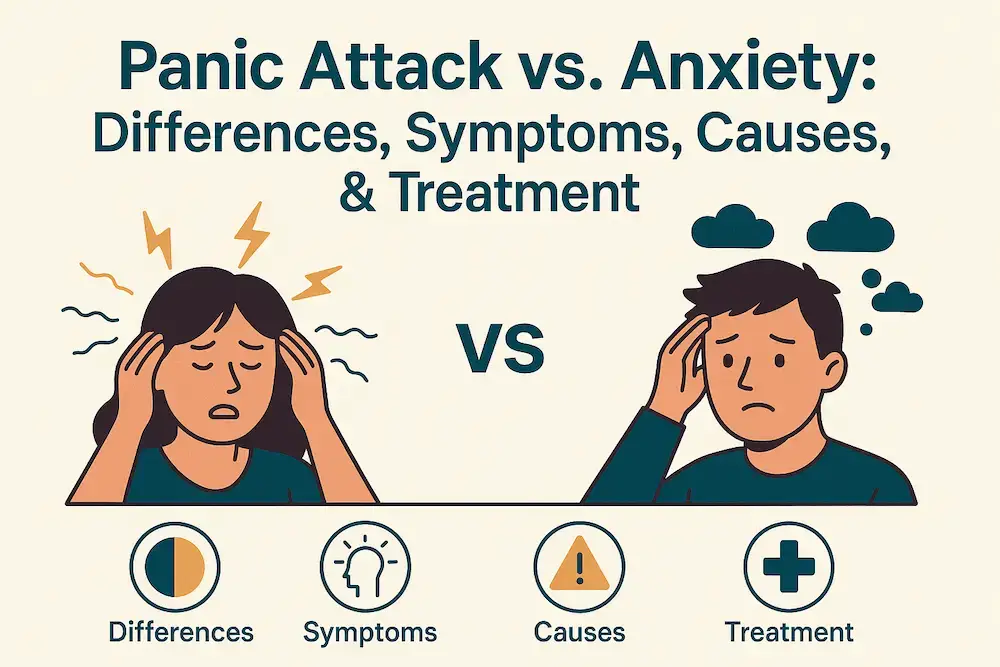

Anxiety vs Panic Attacks – What’s the Difference?
Anxiety vs Panic Attacks is a common topic many people search for when they experience sudden fear, worry, or physical symptoms like a racing heart or shortness of breath.
Anxiety and panic attacks are often spoken about as if they are the same experience. While they are closely related, they are not identical. Understanding the difference can reduce fear, prevent misinterpretation of symptoms, and help you choose the right path toward healing.
This in-depth guide explains everything you need to know about anxiety and panic attacks—how they feel, why they happen, how long they last, and how they are treated—using simple, compassionate language backed by psychology and medical science
Table of Contents
- What Is Anxiety?
- What Is a Panic Attack?
- Key Differences Between Anxiety and Panic Attacks
- Why Do Anxiety and Panic Attacks Feel So Physical?
- What Causes Anxiety?
- What Triggers Panic Attacks?
- Anxiety Disorders vs Panic Disorder
- How Anxiety and Panic Attacks Are Diagnosed
- Treatment Options for Anxiety and Panic Attacks
- Natural Ways to Manage Anxiety
- Techniques to Manage Panic Attacks
- When Should You Seek Professional Help?
- FAQs
- Conclusion
What Is Anxiety?
Anxiety is a slow-building worry or fear about something that might happen.
It is usually connected to stress, overthinking, and life pressures.
Common symptoms of anxiety
Mental and emotional symptoms
- Excessive worrying
- Overthinking and racing thoughts
- Difficulty concentrating
- Feeling on edge or restless
- Fear of worst-case scenarios
Physical symptoms
- Muscle tension
- Fatigue
- Headaches
- Stomach discomfort or nausea
- Trouble sleeping
- Tightness in the chest
Anxiety feels like a constant background noise—always there, always worrying.
Example: Anxiety may feel like worrying all day about an upcoming exam, health issue, or job interview—even when nothing bad is happening right now.
Learn more about anxiety in other guides on our site at
Learn the 3-3-3 Rule for Anxiety
What Is a Panic Attack?
A panic attack is a sudden, intense wave of fear that peaks within minutes.
It feels like your body goes into emergency mode even when there is no real danger.
Common symptoms of panic attacks
Physical symptoms
- Rapid or pounding heartbeat
- Chest pain or discomfort
- Shortness of breath
- Dizziness or light-headedness
- Sweating or shaking
- Numbness or tingling sensations
Psychological symptoms
- Fear of losing control
- Fear of dying
- Feeling detached from reality (derealization)
- Feeling disconnected from yourself (depersonalization)
A panic attack is very intense but short-lived, usually lasting between 5 and 20 minutes, followed by exhaustion.
Example: A panic attack may suddenly occur while resting or shopping, causing intense fear, chest tightness, and dizziness.
Key Differences Between Anxiety Vs Panic Attacks
| Anxiety | Panic Attack |
|---|---|
| Slow, gradual | Sudden, out of nowhere |
| Mild to moderate | Very strong |
| Hours, days, or longer | 5–20 minutes |
| Tension, worry, restlessness | Chest pain, shaking, fast heartbeat |
| “What if…?” | “I’m losing control” or “I’m dying” |
Quick summary: Anxiety is ongoing and builds gradually, while panic attacks are sudden, intense, and short-lived. Both are common and treatable.
Why Do Anxiety and Panic Attacks Feel So Physical?
Both anxiety and panic attacks activate the fight-or-flight response. This response prepares the body for danger by:
- Increasing heart rate
- Redirecting blood to muscles
- Tightening muscles
- Speeding up breathing
These sensations can feel alarming, but they are not dangerous. They are your body trying to protect you—even when protection is not actually needed.
What Causes Anxiety?
Anxiety can develop from a combination of factors, including:
- Chronic stress
- Trauma or past experiences
- Genetics
- Hormonal changes
- Lack of sleep
- Excessive caffeine
- Ongoing life pressures
Anxiety often grows when the mind feels unsafe or uncertain for long periods.
What Triggers Panic Attacks?
Panic attacks may be triggered by:
- Sudden stress or shock
- Health anxiety
- Phobias
- Overthinking bodily sensations
- Past trauma
- Fear of having another panic attack
Sometimes, panic attacks occur without any obvious reason, which can make them feel even more frightening.
Anxiety Disorder vs Panic Disorder
Anxiety disorders include conditions such as:
- Generalized Anxiety Disorder (GAD)
- Social Anxiety Disorder
- Phobias
- Health Anxiety
Panic disorder is diagnosed when a person experiences recurrent panic attacks along with a persistent fear of having another one.
While related, they are distinct conditions and may require different treatment approaches.
How Anxiety and Panic Attacks Are Diagnosed
Mental health professionals assess:
- Symptom history
- Duration and frequency
- Triggers and patterns
- Impact on daily life
Medical tests may be used to rule out physical conditions such as heart or thyroid problems.
Important: This article is for educational purposes only and is not a medical diagnosis.
Treatment Options for Anxiety and Panic Attacks
Therapy
- Cognitive Behavioral Therapy (CBT)
- Exposure therapy
- Talk therapy
Medication
Doctors may prescribe medication when necessary, depending on severity. Medication decisions should always be made with a healthcare professional.
Natural Ways to Manage Anxiety
- Journaling thoughts
- Daily walking or yoga
- Meditation and mindfulness
- Reducing caffeine
- Maintaining a regular sleep routine
- Deep breathing exercises
Techniques to Manage Panic Attacks
- Grounding techniques such as the 5-4-3-2-1 method
- Slow, controlled breathing
- Relaxing tense muscles
- Sitting in a calm, safe space
- Reassuring yourself that the attack will pass
Breathing techniques can calm the nervous system quickly. Read our step-by-step guide on breathing exercises for anxiety
When Should You Seek Professional Help?
Consider seeking help if:
- Anxiety or panic attacks interfere with daily life
- Panic attacks happen frequently
- You avoid situations due to fear
- Sleep or work is affected
- Symptoms worsen over time
Seeking help is a sign of strength, not weakness
Frequently Asked Questions (FAQs)
1. Can anxiety turn into a panic attack?
Yes. Strong anxiety can sometimes trigger a panic attack.
2. Is a panic attack dangerous?
No. It feels scary but does not cause physical harm.
3. Can you stop a panic attack?
Yes—breathing and grounding techniques help reduce the intensity.
4. Do panic attacks happen only once?
No, some people may have them again during stressful periods.
5. Does anxiety last longer than panic attacks?
Yes, anxiety can last for days or weeks, but panic attacks are short.
6. Can lifestyle changes reduce anxiety?
Absolutely. Sleep, meditation, and healthy routine help a lot.
7. Do I need medicine?
Not always. Many people recover with therapy and lifestyle changes.
8. Are panic attacks a sign of mental illness?
No. Many people experience them during stressful times.
Conclusion
Anxiety builds slowly. Panic attacks strike suddenly.
Both are real. Both are common. And both are treatable.
When you understand what your mind and body are doing, fear loses its power. Healing begins with awareness, patience, and kindness toward yourself.
You are not broken. You are responding to stress—and you can heal.
Have you ever experienced anxiety or panic attacks? Share to help others feel less alone.
Trusted External Resources
Disclaimer: This article is for educational purposes only and does not replace professional medical advice or diagnosis.
