

Morning Anxiety: Causes and Simple Fixes That Actually Work
For many people, mornings are supposed to feel fresh and hopeful. But instead of calm, they wake up with a racing heart, tight chest, nausea, or overwhelming worry. This experience is known as morning anxiety, and it is more common than you think.
If you wake up anxious without an obvious reason, struggle to get out of bed, or feel panic before your day even begins, this guide is for you. In this article, we’ll explore the real causes of morning anxiety and share simple, proven fixes that actually work.
What Is Morning Anxiety?
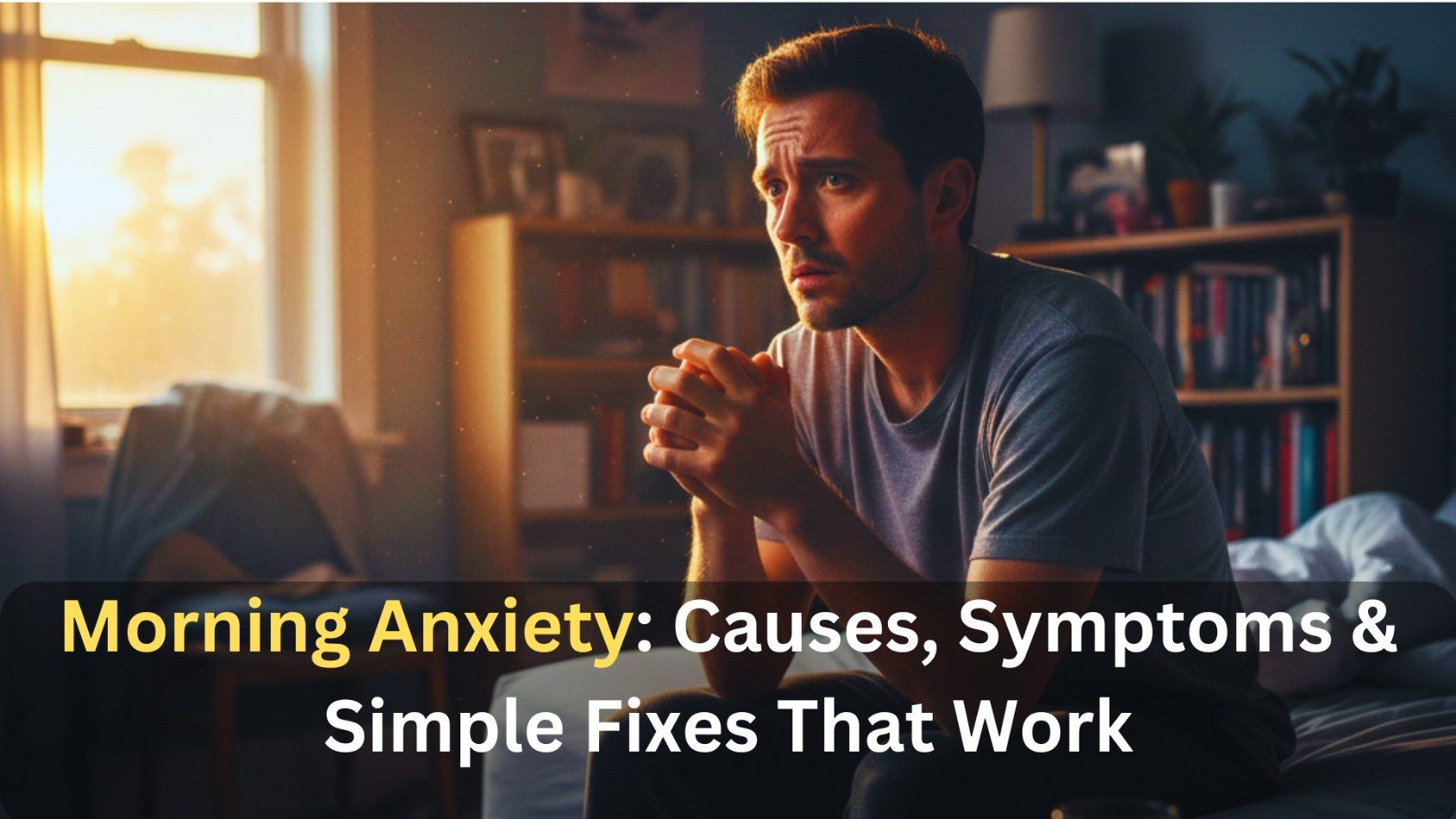
Morning anxiety refers to intense feelings of fear, stress, or worry that occur immediately after waking up or during the early morning hours. Unlike general anxiety that may fluctuate throughout the day, morning anxiety often peaks shortly after waking.
It can happen even when nothing “bad” is happening, which makes it especially confusing and distressing.
Common Symptoms of Morning Anxiety
- Rapid heartbeat or palpitations
- Shortness of breath
- Chest tightness
- Nausea or stomach discomfort
- Restlessness or shaking
- Feeling of dread or fear
- Negative or racing thoughts
- Difficulty starting the day
Why Anxiety Is Worse in the Morning
1. Cortisol Awakening Response
Cortisol is a hormone that helps wake your body up. It naturally peaks in the morning. For people with anxiety, this cortisol spike can feel overwhelming and trigger panic symptoms.
2. Anticipatory Anxiety
Your brain starts thinking about responsibilities, deadlines, or problems before you’re fully awake. This anticipation can trigger anxiety before the day even begins.
3. Poor Sleep Quality
Insomnia, fragmented sleep, or sleep anxiety prevents proper emotional regulation, making anxiety stronger in the morning.
4. Low Blood Sugar
After many hours without food, blood sugar may drop, causing symptoms similar to anxiety.
5. Caffeine and Stimulants
Caffeine increases cortisol and adrenaline, which can worsen morning anxiety.
Is Morning Anxiety a Disorder?
Morning anxiety itself is not a formal diagnosis, but it is commonly linked to:
Understanding the root cause is key to effective treatment.
Simple Fixes for Morning Anxiety That Actually Work
1. Delay Phone Usage
Checking emails, news, or social media immediately increases stress hormones. Avoid screens for the first 30 minutes after waking.
2. Deep Breathing Techniques
Slow breathing activates the parasympathetic nervous system.
Simple method: Inhale for 4 seconds, hold for 4 seconds, exhale for 6 seconds. Repeat for 5 minutes.
3. Eat a Protein-Rich Breakfast
Protein and healthy fats stabilize blood sugar and reduce anxiety symptoms.
4. Gentle Morning Movement
Light stretching, yoga, or walking helps lower cortisol naturally.
5. Reduce Caffeine Intake
Replace coffee with green tea or herbal tea if symptoms are severe.
6. Grounding Exercises
Use the 5-4-3-2-1 technique to anchor your mind in the present moment.
Read also The 333 Rule for Anxiety – Fast Grounding Technique That Works
Natural Remedies for Morning Anxiety

- Ashwagandha – helps regulate cortisol
- Magnesium glycinate – calms the nervous system
- Omega-3 fatty acids – support brain health
- Chamomile or lemon balm tea
Comparison Table: Natural Remedies vs Medications
| Aspect | Natural Remedies | Medications |
|---|---|---|
| Onset Time | Gradual (weeks) | Faster (days to weeks) |
| Side Effects | Minimal | Possible (nausea, fatigue) |
| Long-Term Use | Generally safe | Requires medical supervision |
| Best For | Mild to moderate anxiety | Moderate to severe anxiety |
Comparison Table: Morning Anxiety Fixes
| Fix | Effectiveness | Ease of Use |
|---|---|---|
| Deep Breathing | High | Easy |
| Morning Exercise | High | Moderate |
| Diet Changes | Medium | Moderate |
| Medication | High | Doctor required |
Therapy and Medical Treatment Options
Cognitive Behavioral Therapy (CBT)
CBT helps identify and reframe negative thought patterns responsible for anxiety.
Medications
- SSRIs for long-term anxiety control
- Beta blockers for physical symptoms
Always consult a healthcare professional.
Daily Morning Routine to Reduce Anxiety

- Wake up at the same time daily
- Drink water immediately
- Practice deep breathing
- Light movement or stretching
- Healthy breakfast
When to See a Doctor
- Symptoms persist longer than one month
- Frequent panic attacks
- Daily functioning is affected
Frequent Asking Questions
Cortisol spikes, poor sleep, and stress anticipation are common causes.
It is not dangerous but can affect mental and physical health if untreated.
Yes, stabilizing blood sugar reduces symptoms.
With treatment, improvement may occur within weeks.
They work well for mild to moderate anxiety.
Yes, many people fully recover with consistent care.
Final Thoughts
Morning anxiety can feel overwhelming, but it is manageable. With the right combination of lifestyle changes, natural remedies, and professional support, calm mornings are possible again.
