
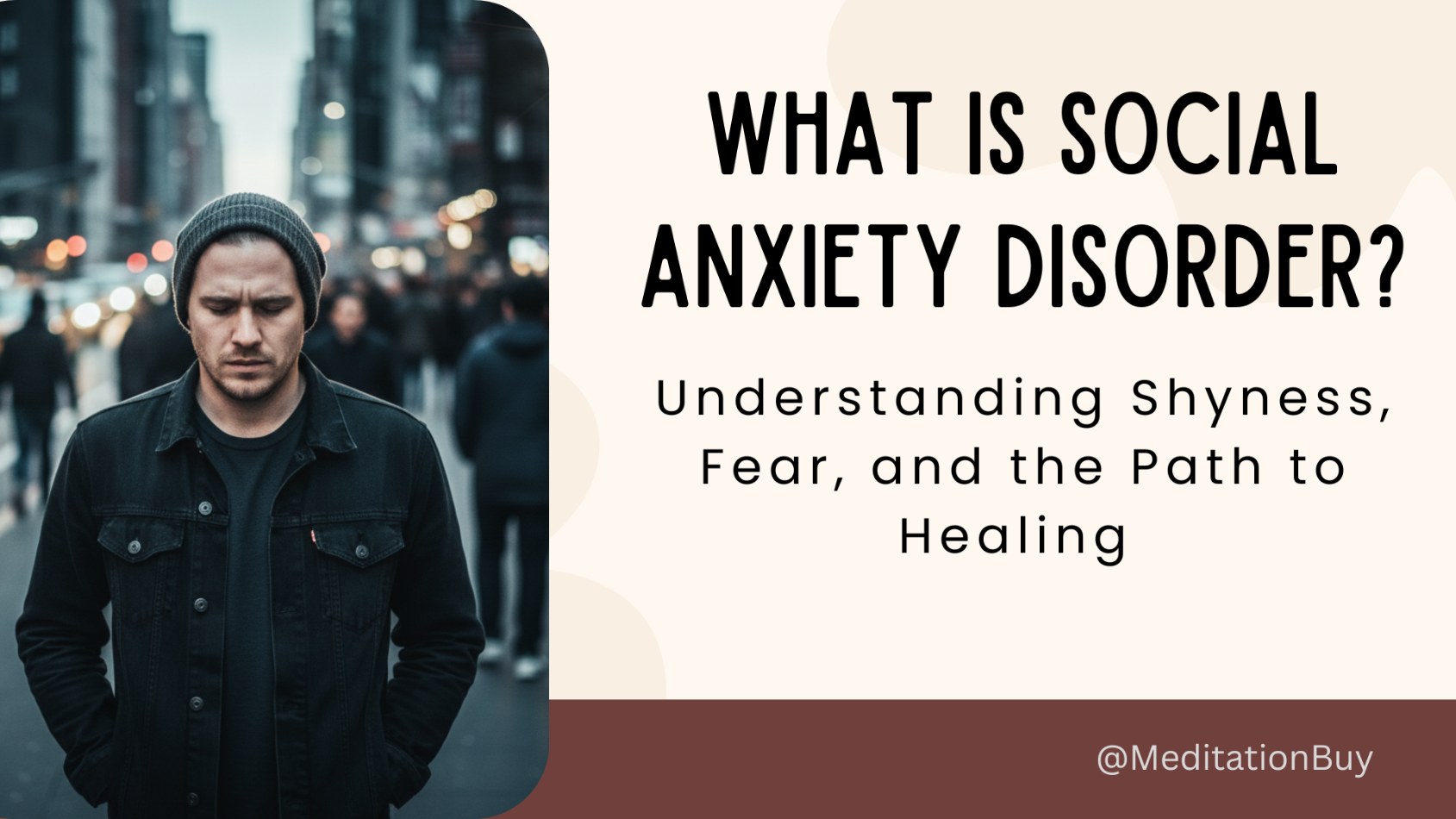

Social Anxiety Disorder: Understanding Shyness, Fear, and the Path to Healing
Feeling nervous in social situations is normal. But when fear becomes so strong that it affects your daily life, relationships, and confidence, it may be more than shyness — it may be Social Anxiety Disorder (SAD). This condition can make even simple activities like meeting new people, eating in public, or speaking up in a group feel overwhelming.
The good news? Social anxiety is treatable, manageable, and you can learn to calm your mind with the right tools. In this gentle guide, we explore what social anxiety really is, why it happens, and how you can heal using simple techniques and mindful awareness.
This article is for educational purposes only and does not replace professional medical advice. If symptoms are severe, consult a qualified mental health professional.
Table of Contents
What Is Social Anxiety Disorder?
Social Anxiety Disorder is an intense fear of social situations where a person worries about being judged, embarrassed, or rejected. It is one of the most common anxiety disorders, affecting millions of people worldwide.
According to Mayo clinic, social anxiety is a long-lasting mental health condition that can impact relationships, work, and personal well-being.
Social Anxiety vs Shyness vs Introversion
The table below explains the key differences between social anxiety, shyness, and introversion in a simple way.
| Aspect | Social Anxiety Disorder | Shyness | Introversion |
|---|---|---|---|
| Definition | A mental health condition involving intense fear of social situations | A personality trait involving mild nervousness in social settings | A personality preference for solitude or small groups |
| Intensity of Fear | Very high and overwhelming | Mild to moderate | Low or none |
| Impact on Daily Life | Interferes with work, relationships, and routine tasks | Minimal impact | No negative impact |
| Physical Symptoms | Rapid heartbeat, sweating, trembling, nausea | Light nervousness | Rare or none |
| Avoidance Behavior | Actively avoids social situations | Occasional avoidance | Chooses solitude, not avoidance |
| Self-Perception | Fear of judgment or embarrassment | Temporary self-consciousness | Comfortable with self |
| Treatment Needed | Yes (therapy, mindfulness, sometimes medication) | No treatment required | No treatment required |
| Can It Improve? | Yes, with proper support | Yes, naturally over time | Not a problem to fix |
Common Signs & Symptoms
People with social anxiety often experience:
- Fear of meeting new people
- Worry about being judged or humiliated
- Racing heart or sweating in social settings
- Trouble making eye contact
- Overthinking after conversations
- Avoiding events, crowds, or social situations
- Feeling “watched” even when alone
These symptoms can make daily life stressful and exhausting.
You may also want to read about different anxiety disorders and their symptoms to understand how social anxiety compares.
Why Does Social Anxiety Happen?
There is no single cause. Social anxiety usually develops from a mix of factors:
- Biology: Some people naturally have a sensitive nervous system.
- Past experiences: Bullying, strict parenting, or public embarrassment.
- Family patterns: Anxiety can run in families.
- Brain functioning: Overactive fear centers (amygdala) increase social fear.
Understanding the cause helps reduce shame. Social anxiety is not your fault — it’s a response your body learned to protect you.
Treatment Options
Social anxiety can improve with the right support. Common treatments include:
1. Cognitive Behavioral Therapy (CBT)
CBT is one of the most effective treatments for social anxiety. It helps you challenge negative thoughts and slowly face social situations with confidence.
Read more about CBT here: Cognitive Behavioral Therapy for Anxiety
2. Exposure Therapy
A gentle method of slowly facing the things you fear. Step-by-step exposure teaches your brain that social situations are not dangerous.
3. Medication
Doctors may prescribe SSRIs or anti-anxiety medications for severe cases. Learn more here: Anxiety Medications Guide
4. Mindfulness & Meditation
Mindfulness helps you reduce overthinking and stay calm in the present moment. It teaches your mind to respond, not react.
Explore mindfulness here: Guided Meditation for Anxiety Relief
Self-Help Strategies for Social Anxiety
Here are simple practices that help many people manage social anxiety:
- Practice slow breathing during stressful moments
- Challenge “what if” thoughts when they arise
- Try role-playing or short practice conversations
- Start with small exposure steps, like saying hello to one new person
- Keep a journal to track triggers and progress
- Exercise daily to release tension
- Join support groups or talk to trusted friends
How Meditation Helps Social Anxiety
Meditation slows down a busy mind. It teaches you to observe thoughts instead of believing them. Over time, the fear of judgment becomes weaker.
Meditation slows down a busy mind. It teaches you to observe thoughts instead of believing them. Over time, the fear of judgment becomes weaker. Practices like body scan meditation for anxiety are especially helpful for releasing social tension.
Best Meditations for Social Anxiety:
- Breath awareness meditation
- Visualization meditation
- Loving-kindness meditation
- Body scan for tension release
These practices calm the nervous system and increase self-confidence.
Everyday Ways to Build Confidence
Small daily habits can make a big difference:
- Speak slowly and mindfully
- Make eye contact for 1–2 seconds
- Practice gratitude journaling
- Limit caffeine, which increases anxiety
- Smile gently when meeting people
- Learn to say “I need a moment” during stress
Over time, these small steps build strong inner confidence.
Final Thoughts
Social anxiety does not define you. It is simply a pattern your mind has learned — and with compassion, practice, and support, you can learn a new pattern of calm and confidence.
Be patient with yourself. Healing is not about being perfect; it’s about taking small steps toward inner peace.
If this guide helped you, feel free to comment, share your story, or support someone who may need this.
FAQs
A condition where a person experiences intense fear in social situations.
No. Social anxiety is stronger and affects daily life.
With treatment and practice, symptoms can greatly improve.
CBT and exposure therapy are highly effective.
