

Visualization Meditation for Anxiety: A Gentle Path to Inner Calm
Introduction
Anxiety often feels like a storm inside the mind—fast thoughts, tight breath, racing heart.
But what if you could use the power of your imagination to guide yourself out of that storm?
This is where visualization meditation for anxiety becomes a gentle, natural healer.
This technique is also known as guided imagery meditation and is widely used for anxiety relief.
Visualization meditation is more than closing your eyes and “thinking happy thoughts.”
It is a mindful technique where you paint calming images in your mind, helping your body relax and your thoughts slow down.
It’s a practice many therapists recommend and one that countless people use to find peace in a busy world.
If you’ve ever imagined yourself on a quiet beach, walking in a green forest, or sitting under the warm sun,
you’ve already experienced a small form of visualization. With intention and practice, this becomes a powerful tool
to calm anxiety from the inside out.
Table of Contents
- Introduction
- What Is Visualization Meditation?
- Why Visualization Meditation Helps With Anxiety
- How to Practice Visualization Meditation
- Types of Visualization Techniques
- The Science Behind Visualization
- Tips to Get the Most Out of Visualization
- Common Challenges
- Using Visualization in Daily Life
- Final Thoughts
What Is Visualization Meditation?
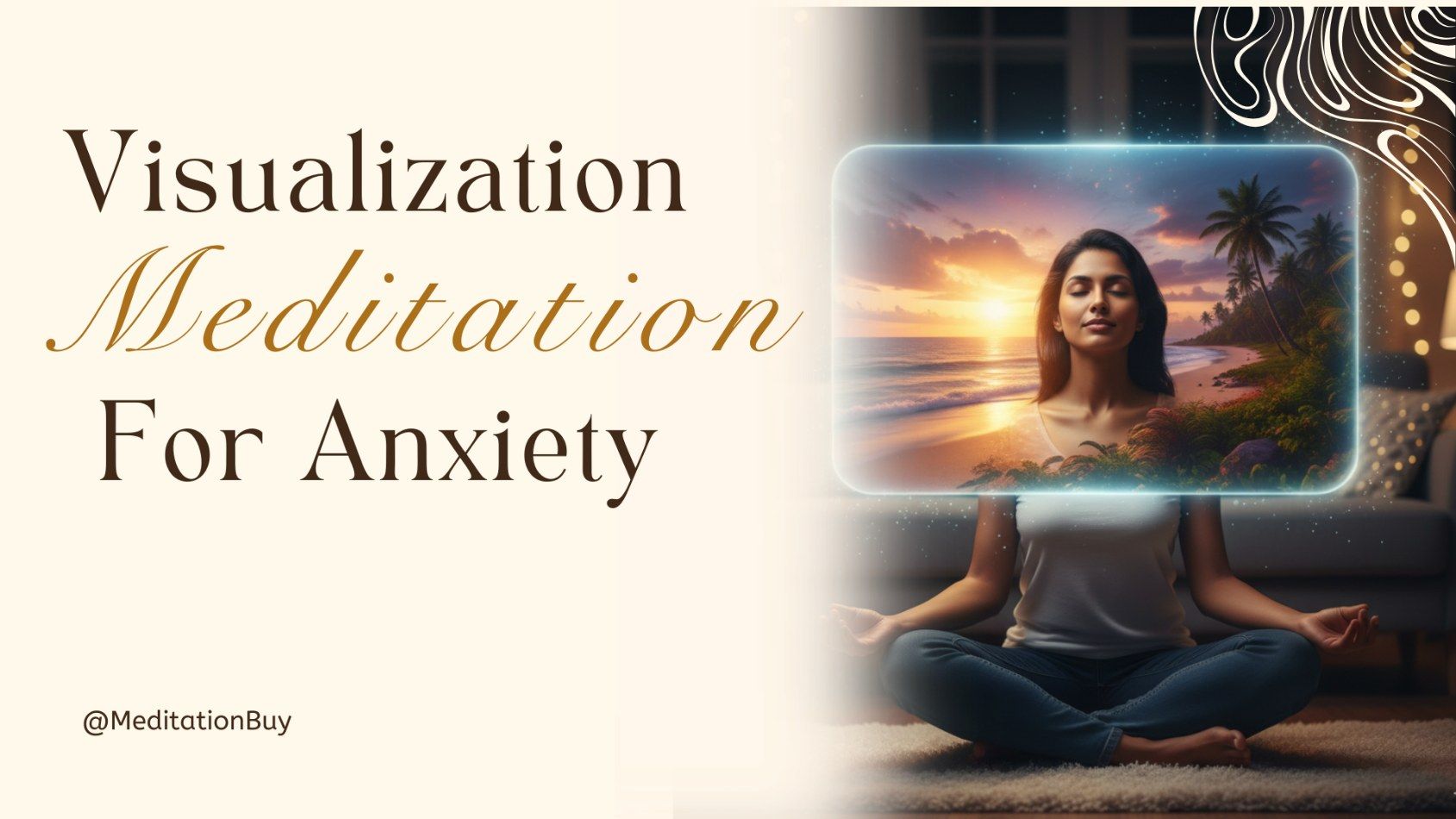
Visualization meditation is a guided mental practice where you create peaceful images in your mind to relax your body and reduce stress.
Instead of focusing only on your breath, you gently imagine scenes, colors, light, or energy that bring calmness.
This method is simple and works for all ages because the mind responds strongly to imagery. Studies show that imagined experiences
can trigger real physical responses—slower breathing, relaxed muscles, and a quieter mind.
(Reference: Creative Visualization Psychology)
Why Visualization Meditation Helps With Anxiety
Here’s why visualization meditation for anxiety is so effective:
1. It Sends the Brain a “Safety Signal”
When you imagine calming scenes, your brain releases soothing chemicals like serotonin. This stops the stress response and switches on relaxation.
2. It Breaks the Anxiety Thought Loop
Anxious thinking pulls you into fear. Visualization gently guides your mind to safer, softer images—breaking the cycle.
3. It Helps Your Body Relax Physically
Your muscles, breath, and heart rate respond to what you imagine. This is why a peaceful image can help you instantly feel lighter.
4. It Builds Emotional Strength
Over time, visualization rewires your brain, helping you stay calm even in stressful moments.
How to Practice Visualization Meditation (Step-by-Step)
Step 1: Find a Quiet Space
Sit or lie down comfortably. Let your body settle.
Step 2: Take a Few Slow Breaths
Inhale deeply… exhale slowly. This prepares your mind for stillness.
Step 3: Choose a Peaceful Image
You can imagine:
- A quiet beach
- A mountain sunrise
- A glowing light around your body
- A safe, cozy room
- A warm breeze
Step 4: Add Details
Use your senses: What do you see? Hear? Feel? Smell?
The more detail you add, the deeper the relaxation.
Step 5: Stay With the Image
Sit with the scene for 5–10 minutes.
If thoughts appear, gently return to your visualization.
Step 6: Slowly Return
Take a deep breath and open your eyes softly.
Types of Visualization Techniques
1. Nature Visualization
Imagine forests, rivers, rain, warm sand, or gentle sunlight.
2. Light Visualization
Picture a white or golden light entering your body and reducing stress.
3. Safe Space Visualization
Create a mental sanctuary—a place where anxiety cannot reach you.
4. Goal Visualization
Visualize yourself calm, confident, peaceful, and in control.
The Science Behind Visualization
Research shows that the brain responds to imagined images almost the same way it responds to real experiences.
Research in psychology and mindfulness studies has shown that visualization can lower anxiety and improve emotional balance.
Another report from Harvard showed that guided imagery reduces heart rate and improves mood.
Anxiety management methods like this are widely supported by mental health organizations
(Reference: American Psychological Association).
Tips to Get the Most Out of Visualization
- Practice at the same time each day
- Start with short 5-minute sessions
- Use soothing background sounds
- Be patient with your mind
- Repeat your favorite scene often
Common Challenges and How to Handle Them
“My mind keeps wandering.”
Gently return to your image each time. This is normal.
“I can’t imagine clear pictures.”
Visualization is not about “seeing perfectly.”
Even a soft idea or feeling is enough.
“I feel restless.”
Start with breathing meditation, then slowly move to visualization.
How to Use Visualization in Daily Life
You can practice visualization meditation for anxiety during:
- Stressful moments at work
- Before sleep to calm the mind
- During travel or waiting
- After waking up to set a peaceful tone
Even 60-second mini-visualizations can reset your mood and help you feel grounded.
Real also our Breath Awareness Meditation
Final Thoughts
Visualization meditation reminds you that peace is not far away—it already lives inside you.
When anxiety rises, your mind may feel chaotic, but with gentle imagery, you can guide yourself back to calmness.
Every peaceful scene you imagine becomes a doorway to healing.
Start today. One breath. One picture. One moment of stillness at a time.
Explore more calming practices on our site:
Did this guide help you?
share this article with someone who may need a moment of peace today.
Google Answer Box Short Answer:
Visualization meditation for anxiety is a calming technique where you imagine peaceful scenes, light, or safe spaces to relax your mind and body. It helps reduce stress, slow thoughts, and create emotional balance.FAQs
It is a mindfulness practice where you imagine peaceful scenes or calming images to relax your mind and body.
It interrupts anxious thoughts, slows the stress response, and guides your body into relaxation.
Start with 5–10 minutes daily and slowly increase as you feel comfortable.
No. Even soft mental pictures or feelings work well.
Yes, using simple images like light or nature can quickly reduce intensity.
Absolutely. It is one of the easiest mindfulness techniques.
Morning, before sleep, or anytime you feel stressed.
No, but it is a powerful support tool. Always follow medical advice.
